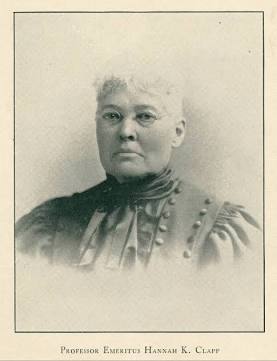
 Hannah Kezia Clapp (July 5, 1827 - October 8, 1908) was a pioneering educator, suffragist, and community leader who played a vital role in shaping early Nevada's
educational and civic landscape.
Hannah Kezia Clapp (July 5, 1827 - October 8, 1908) was a pioneering educator, suffragist, and community leader who played a vital role in shaping early Nevada's
educational and civic landscape.Partner Elizabeth Cecilia Babcock
Queer Places:
512 Mountain St, Carson City, NV 89703, USA
555 Lytton Ave, Palo Alto, CA 94301, USA
Mount Hope Cemetery, 1048 State Street, Bangor, Maine 04401 United States
Hannah Kezia Clapp (July 5, 1827 - October 8, 1908) was a pioneering educator, suffragist, and community leader who played a vital role in shaping early Nevada's
educational and civic landscape.
Born on July 5, 1827, Clapp moved westward as a young woman and became one of the most influential figures in Nevada’s statehood era.
Clapp co-founded the Sierra Seminary in Carson City, Nevada, alongside her life partner, Elizabeth Cecilia Babcock. The private, co-educational school became a cornerstone of early Nevada education, known for its high standards and welcoming environment.
Clapp and Babcock relocated to Reno when the University of Nevada hired Clapp to teach English and history and serve as the university's librarian. Babcock helped open the city's first kindergarten during this era.
Clapp was a major leader in the women’s suffrage movement, serving as vice president of the Nevada Equal Suffrage Association and representing the state in the National Woman Suffrage Association. She led early legislative campaigns pushing for women’s right to vote in Nevada.
Following Babcock’s death in 1899, Clapp eventually retired to Palo Alto, California. She passed away on October 8, 1908, leaving behind a lasting legacy as a trailblazing educator and political activist.
Clapp bought Babcock a diamond engagement ring, which Babcock wore on her engagement finger for the rest of her life.
The couple lived together for over 35 years, pooling their finances to build a large home and garden in Carson City, and eventually planning a retirement home in Palo Alto.
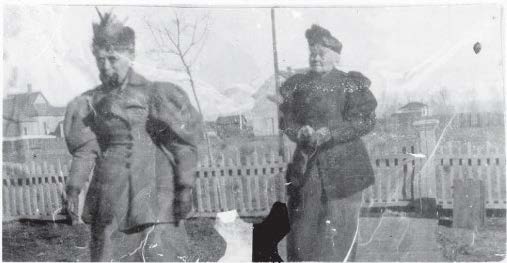
Miss Elizabeth Babcock and Miss Hannah Clapp, Photo from Mountain West Digital Library, University of Nevada Reno
Unlike many historical same-sex couples whose relationships were erased or hidden, Clapp and Babcock received significant, explicit recognition from their community:
When Babcock died in 1899 after a stroke, local obituaries in the Reno Evening Gazette noted that Clapp cared for her with a "devotion that but few couples possess," explicitly recognizing their bond as far deeper than typical companionship or sisterhood.
Organizations like the Trinity Parish Woman’s Guild formally extended condolences directly to Clapp as the primary grieving partner, demonstrating a recognized network of support among local suffragists and community members.
Journalists and contemporaries used heteronormative frames to conceptualize their dynamic:
San Francisco journalist Miriam Michelson authored an article titled "Nevada’s Feminine David and Jonathan" in the San Francisco Bulletin, framing their love as a "quaint soul marriage" while using gendered dynamics—describing Clapp’s "masculine mind" and handyman habits alongside Babcock’s traditional domesticity.
Press coverage often idealized their bond on a elevated, spiritual plane, framing it in terms acceptable to 19th-century readers while clearly acknowledging a lifelong partnership equivalent to marriage.
Babcock requested before her death that their ashes be joined ("where your ashes may be laid upon my breast"). In 1908, Clapp’s will fulfilled this wish, and both women rest together at Mount Hope Cemetery in Bangor, Maine.
In her later years, Clapp embraced Spiritualism, writing letters to her family containing automatically written messages she believed were directly communicated by Babcock’s spirit, allowing her to stay connected to her lifelong partner.
References:
 Public Faces, Secret Lives by Wendy L. Rouse |
Other references:
Support this project
This website is a passion project researched, developed, and funded entirely by me. If you find the content valuable and would like to help support the ongoing research and hosting costs, any contribution is deeply appreciated.
Thank you for keeping this independent resource alive!
My books on Amazon: Elisa Rolle's books